
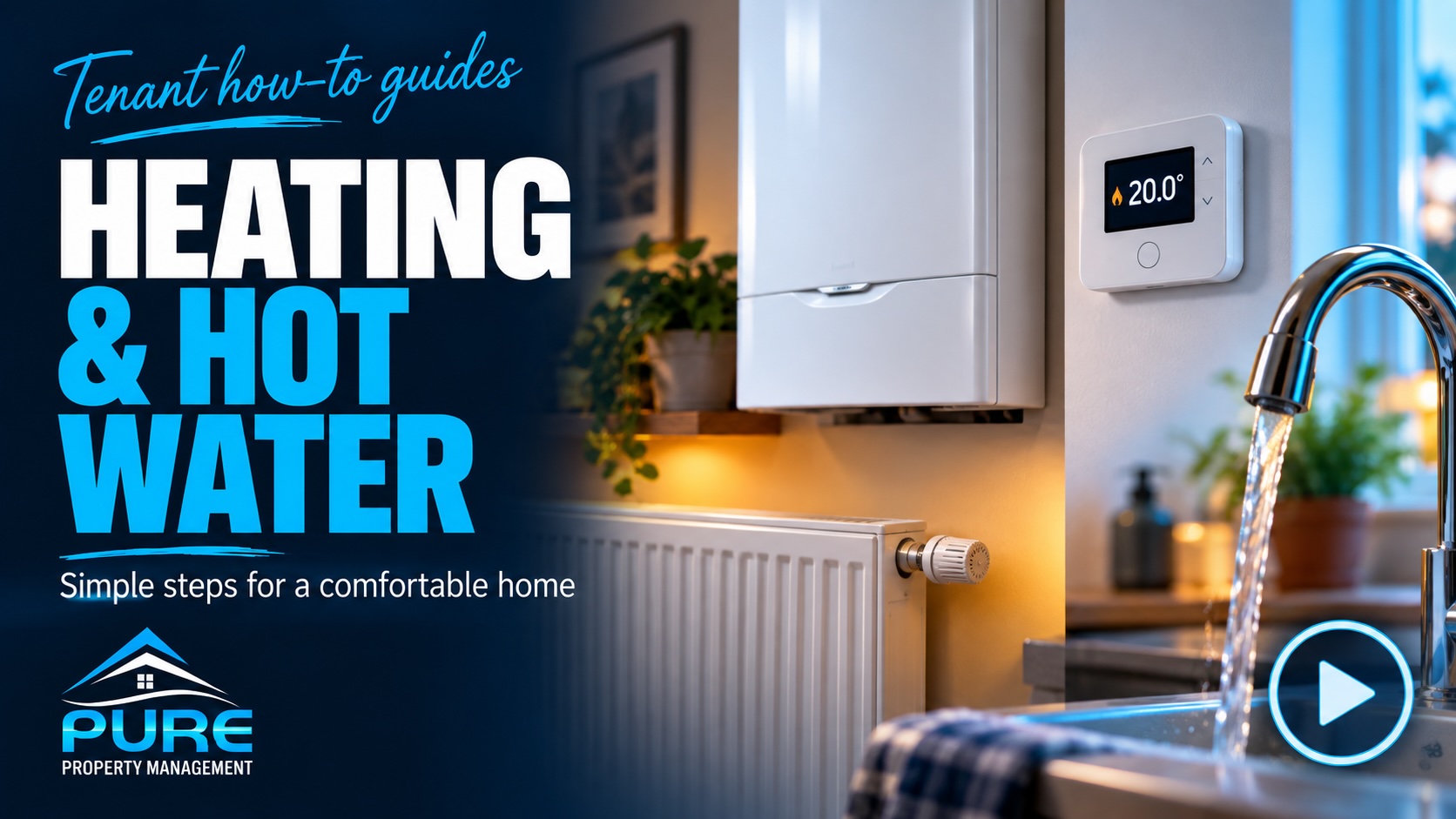
Heating & Hot Water Maintenance for Tenants - Common Issues Explained
Heating & hot water maintenance for tenants usually comes down to a handful of repeat problems: lost boiler pressure, trapped air in the radiators, or a thermostat that’s set lower than it feels.
Each one has an obvious symptom once you know what to look for. A boiler that keeps cutting out or won’t fire up at all is often a pressure issue. A radiator that’s cold at the top but warm at the bottom almost always means air needs bleeding out. And a flat that never quite reaches temperature can sometimes be fixed by checking the thermostat settings before assuming the system is faulty.
Work through the videos below in order: pressure first, then radiators. Most common heating complaints can be solved in minutes without a call-out. If yours can’t, report it to us and we’ll arrange the right tradesperson.
Heating & Hot Water Maintenance for Tenants: Preventing Problems Before They Start
A few regular habits keep your heating running smoothly all winter. Edinburgh winters make a monthly pressure check especially worthwhile, and our property maintenance guide for tenants covers other jobs worth doing each season:
- Check the boiler pressure gauge once a month, especially in winter when pressure drops faster.
- Bleed radiators at the start of the heating season, even if they seem to be working fine.
- Keep the heating on low overnight during cold snaps to stop pipes freezing.
- Don’t cover radiators with clothing or furniture, which stops heat circulating properly.
- Listen for banging or gurgling pipes, which usually means air or a pressure issue building up.
These short how-to videos help you sort common heating and hot water issues in minutes, before you need to raise a maintenance request.
Boiler Not Working? Quick Fixes to Try at Home
How to Repressurise a Combi Boiler
One of the biggest heating and hot water maintenance problems tenants experience is the loss of boiler pressure. Each manufacturer may have a different way to repressurise the boiler, but the most common is a filling loop. Here is a short video showing how to repressurise your boiler if it has a filling loop.
How to Read Your Boiler Pressure Gauge
Most boiler gauges have a coloured zone, usually marked in green, between 1 and 1.5 bar. If the needle sits below that, in the red, your boiler needs repressurising using the steps in the video below. If it sits above the green zone, the system has too much pressure, which is less common but worth reporting if bleeding a radiator doesn’t bring it back down. Check the gauge cold, before the heating has been running, for the most accurate reading.
How to Repressurise a Worcester Boiler
Worcester boilers use a special key to be re-pressurised, and the exact steps depend on your model. Check the name on the front panel, then follow the video below.
How to Repressurise a Worcester Greenstar Boiler
Greenstar models have a display that shows the pressure reading. This make of boiler uses a lever for re-pressurising. Watch the video below to see where to find it and how to top it up.
What to Do If Your Condensate Pipe Freezes
In cold weather the condensate pipe, which carries waste water from your boiler to a drain, can freeze and make the boiler shut down. If the pipe is outside and safe to reach, the video shows how to thaw it with warm (never boiling) water. If you can’t reach it safely, report the fault to us.
How to Bleed a Radiator
If you find that your radiator is not heating up, check the boiler pressure.
If the bottom half of the radiator is heating up but not the top, you may need to bleed the radiator as there could be air in the heating system. Here’s how to do it!
No Hot Water? Check These First
Before you report a fault, check four things:
- Boiler pressure is in the green zone (see the gauge guide above).
- The programmer or timer is set to hot water and the time is correct.
- Your thermostat is turned up, if you have one.
- If you have a hot water cylinder, the switch or immersion heater is on.
Never open the boiler casing. Only a Gas Safe registered engineer should work on it.
Who Is Responsible for Heating Repairs?
In Scotland, landlords must keep heating and hot water installations in reasonable working order under the Repairing Standard. Report any fault promptly so we can arrange the repair, and tell us if it affects anyone vulnerable. For other common questions, see our Tenant FAQ.
What to Do in a Heating or Gas Emergency
If you smell gas, leave the property immediately, don’t turn any switches on or off, and call the National Gas Emergency line on 0800 111 999 from outside. For a burst pipe near the boiler or heating system, turn off the stopcock and switch the boiler off at the wall. If you have no heating or hot water and it’s putting anyone vulnerable at risk, contact us straight away rather than waiting for a routine repair slot.
How to Report a Heating and Hot Water Fault
You can report any maintenance issue through our online maintenance portal.
The more detail you give, the faster we can arrange the right tradesperson. Please include:
- What happened and when it started
- Which room or appliance is affected
- What you have already tried
- Photos or a short video, where it is safe to take one
- For more guidance on renting with us, visit our Tenant Advice page.


